15:15, 17 August 2018
This article is transferred from the WeChat public account: Occasional Cure (ID: to-cure-sometimes), original title: “After choosing alternative therapies such as Chinese herbal medicine, cancer patients have a higher risk of death, this study tells you why?” Author: Zeng Ding. Tiger Sniff Network is authorized to reprint.
Following a study last year that confirmed a significant decrease in survival rates for cancer patients choosing alternative therapy (AM), a study in July found that those who chose complementary therapy (CM) for cancer are more likely to refuse conventional cancer therapy (CCT), leading to a higher risk of death. The study was published in the Journal of the American Medical Association, a leading medical journal in the field of cancer, and the research team came from Yale University School of Medicine and Yale University Cancer Center.
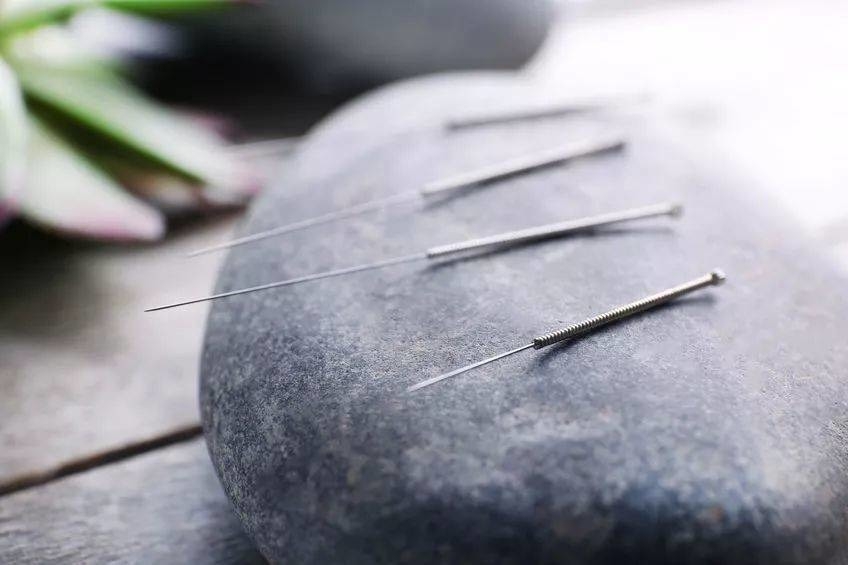
Conventional therapy (CCT) refers to surgery, radiation, chemotherapy, and hormone therapy. The above-mentioned complementary therapies (CM) and alternative therapies (AM) are often collectively referred to as “complementary and alternative therapies” (CAM). There are many complementary and alternative treatments for cancer, including herbal medicine, acupuncture, tai chi, qigong, massage, vitamins and minerals, probiotics, yoga, meditation, homeopathy, naturopathy, and special diets. Traditional Chinese medicine (TCM) is also among them.
The main difference between complementary and alternative therapies is the way they are used during the treatment process. Complementary therapies are methods used in addition to conventional therapies and can also be used as an alternative to adjunctive therapy. Alternative therapies have completely replaced conventional cancer treatments. In the past, scientific evidence on the use of complementary and alternative therapies and their impact on survival in cancer patients was extremely scarce.
There are few relevant studies or data in the academic community to evaluate their effectiveness. In the past year, research published by a team at Yale University has refreshed our understanding of this field. A study published last year in the Journal of the National Cancer Institute showed that patients with four common cancers – breast, prostate, lung and colorectal – had a lower five-year survival rate and a 2.5-fold increase in the likelihood of dying from cancer when they used alternative therapies instead of conventional therapies.
Compared with patients receiving conventional therapy, breast cancer patients using alternative therapy have the highest risk of death within 5 years, which can be increased to 5.68 times, followed by colorectal cancer patients with 4.57 times, and lung cancer patients with 2.17 times. 87% of breast cancer patients who receive conventional therapy survive more than 5 years, compared to only 58% of patients who choose alternative therapy. 79% of colorectal cancer patients who receive conventional therapy survive more than 5 years, compared to only 33% of patients who choose alternative therapy. 41% of lung cancer patients who receive conventional therapy survive more than 5 years, compared to only 20% who choose alternative therapy. For patients with prostate cancer, the 5-year risk of death increases to 1.68 times in patients with alternative therapies compared to conventional therapy.
There was no statistically significant difference in the data, but the researchers believe that this is because the vast majority of prostate cancer patients survived much longer than the follow-up time of this study, so the results did not surprise them. In addition, some patients who chose alternative therapy survived, possibly because many people found that their condition worsened and ended up receiving conventional therapy – the authors noted that their analysis did not exclude such patients: they received alternative therapy elsewhere and then transferred to the treatment center participating in the case report to receive conventional therapy. All of this makes the data that “the mortality rate of patients who choose alternative therapies is 2.5 times higher” may still be underestimated.
After the publication of this study, some industry commentators pointed out that if the data is tracked for a long time, the contrast may be more obvious. Cancer patients abandon conventional treatments, and the results are obviously dangerous. But what happens if the patient only chooses them as complementary therapies and also chooses conventional therapy?
To this end, a research team from Yale University conducted the latter study. They are still patients with the above 4 common cancers, but they do not delay in choosing conventional cancer therapies when they are first diagnosed. However, the results showed that the risk of death increased significantly after receiving complementary therapy. Although there is no significant statistical difference in 5-year survival rates between patients with prostate or lung cancer who receive complementary therapy, the risk of death in patients with breast and colorectal cancer is significantly different.
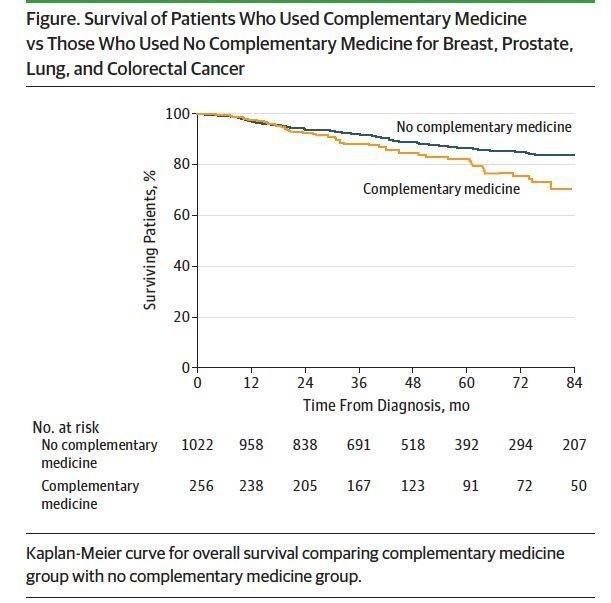
These patients are receiving complementary therapies as well as conventional therapies, so what is the problem that leads to their increased risk of death? The investigator found the answer during the treatment. Complementary therapies themselves did not increase the risk of death in cancer patients, however, they all later delayed or refused conventional cancer therapies. Among cancer patients using complementary therapies, 7.0% refused surgery (0.1% in the control group), 34.1% refused chemotherapy (3.2% in the control group), 53.0% refused radiotherapy (2.3% in the control group), and 33.7% refused hormone therapy (2.8% in the control group).
The researchers analyzed that if patients were able to receive further conventional therapy, there was no significant difference in survival rates for cancer patients with or without alternative therapy. Like the study published in August 2017, this new study attracted a lot of attention from the scientific community and the media after it was revealed in July 2018. These two findings are of great reference value to American physicians and patients. While the study does not break down complementary and alternative therapies, overall, it reveals the possible consequences of complementary and alternative therapies.
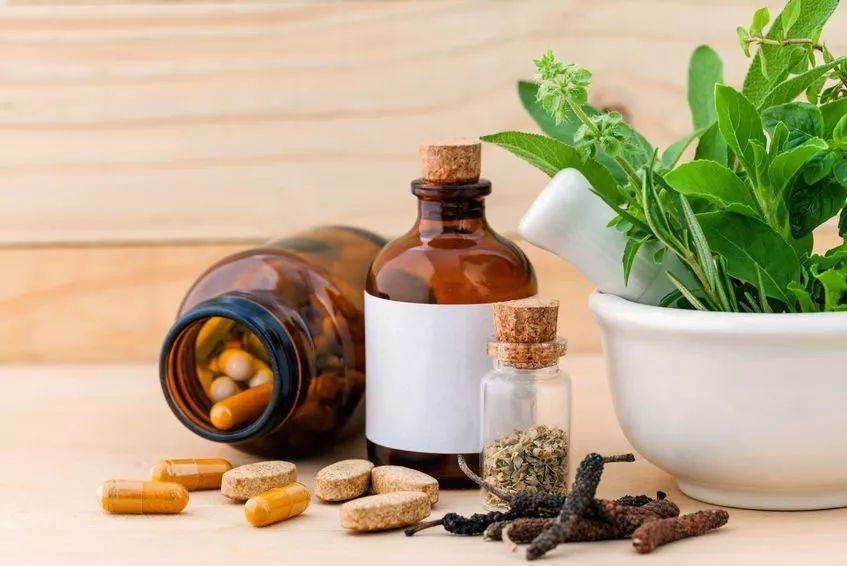
Researchers have found solid scientific evidence. They obtained patient data from the National Cancer Database (NCDB) and screened hundreds of cancer patients using alternative and complementary therapies from more than 1.9 million cancer patients documented from 2004 to 2013, and conducted a controlled study with thousands of matched cancer patients of the same type. One of the investigators, Skyler Johnson, is the chief resident in the Department of Radiation Oncology at Yale School of Medicine. In an interview with New Scientist magazine, he said that many of his patients have opted for complementary and alternative therapies. “They may be herbs, plant-based healing herbs, homeopathy, special diets, or energy crystals. Energy crystals, in particular, are basically stones, but they are believed to have the magic to cure cancer. ”
Skyler Johnson said the evidence they found now suggests that patients have worse survival with these therapies to treat cancer. He hopes that this study will serve as a reminder to strengthen communication between doctors and patients and to examine alternative therapies more rigorously. Another author, Dr. Cary Gross, also calls for more in-depth research into the use of alternative therapies to treat cancer.
Many patients choose alternative therapies in the dark, and the public needs to figure out which treatment options are more effective. Researchers recommend that for those patients with potentially curable cancers, doctors should try their best to recommend therapies that have been proven to be effective, and patients should not use complementary and alternative therapies as the main treatment options for cancer. Statistics show that about 2/3 of cancer patients believe that complementary therapy will prolong their lives, and even 1/3 expect it to cure the disease, but at present, there is still a lack of sufficient evidence that complementary therapy can improve the survival of patients.
Cancer is a global medical problem, and patients are willing to try various medical methods. Conventional treatments such as surgery, radiotherapy, chemotherapy and hormone therapy have saved and sustained the lives of countless patients, but sometimes they are still helpless, and even lead to a significant decline in the quality of life of patients during their lifetime. Along with conventional treatments such as radiotherapy and chemotherapy, there is a cruel impression of side effects such as pain, hair loss, and vomiting. What is difficult for patients and their families to accept is that in the face of the disease, some patients have experienced long-term suffering from conventional therapies and may not be able to avoid death in the end.
For Americans, this is also the backdrop to the prevalence of complementary and alternative therapies such as herbs and diets. Because of this, there are people like Jobs who choose to try alternative therapies including vegetarianism, acupuncture, herbal treatment, juice detoxification, etc. in the face of cancer, and do not undergo surgery in time, so that when he wants to seek surgical treatment, he finds that the tumor has spread and has missed the best opportunity. According to statistics, 48%-88% of cancer patients worldwide have used complementary and alternative therapies during treatment.
In the United States, the market for related therapies is estimated to be worth billions of dollars. This is partly because the therapy is easily accessible and highly marketed, and on the other hand, because it is highly compatible with patients’ health beliefs and values, especially related to their pursuit of health autonomy. Research and data related to complementary and alternative therapies in China are still very lacking.
Cancer patients in China may have used more means other than conventional therapies than Americans, influenced by traditional medicine, but we don’t know anything about the overall condition of these patients for the time being. However, Chinese are by no means unfamiliar with other complementary and alternative therapies that Americans have received. Cancer patients reported by the media, such as Lin Daiyu’s actor Chen Xiaoxu, female doctor Yu Juan of Fudan University, and singer Yao Beina, have all chosen methods such as starvation therapy, special diets, and traditional herbal medicine. If these cancer patients had adhered to conventional treatments, they might have a chance not to die so early.
Now, research and statistics tell us that living longer and receiving conventional treatments rather than relying on complementary and alternative therapies remains the most reliable option for the cancer patient population.
References:
1.Use of alternative medicine for cancer and its impact on survival[J]. JNCI: Journal of the National Cancer Institute, Johnson S B, Park H S, Gross C P, et al. 2018, 110(1).
2.Refusal of Conventional Cancer Therapy, and Survival Among Patients With Curable Cancers[J]. JAMA oncology, Johnson S B, Park H S, Gross C P, et al. 2018.
3.Choosing alternative cancer treatment doubles your risk of death. New Scientist, Jessica Hamzelou, 14 August 2017