TP-LINK is going to launch mesh routing products, proving that the wireless power of the router is not very good, in other words, the wireless routers of domestic manufacturers must be compulsory SRRC certification, and there can be no scary wireless power, and they will be forcibly removed from the shelves if they exceed the standard. It is estimated that few people will say anything in the future, and the Netgear ASUS Linksys signal is not as good as the domestic one!!
There are no screws at the bottom, and it is found that the shell and base are pasted through double-sided adhesive, and the force is applied from the side of the mesh mouth, even harder, and it must be not afraid of breaking to succeed.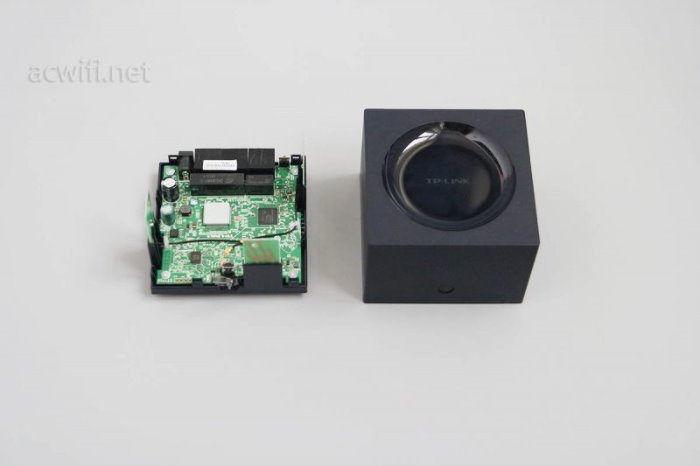
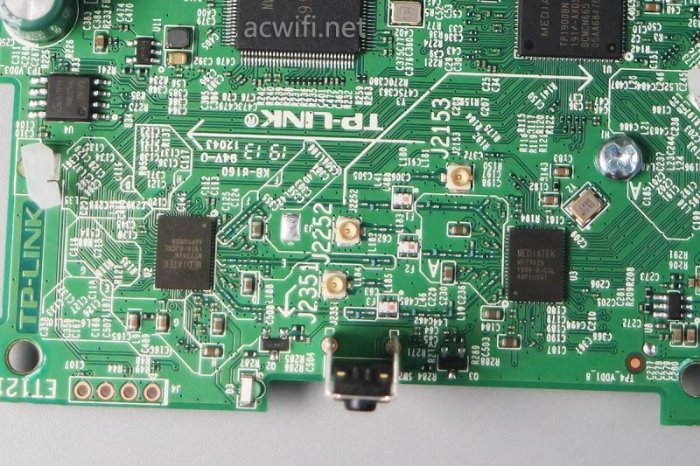
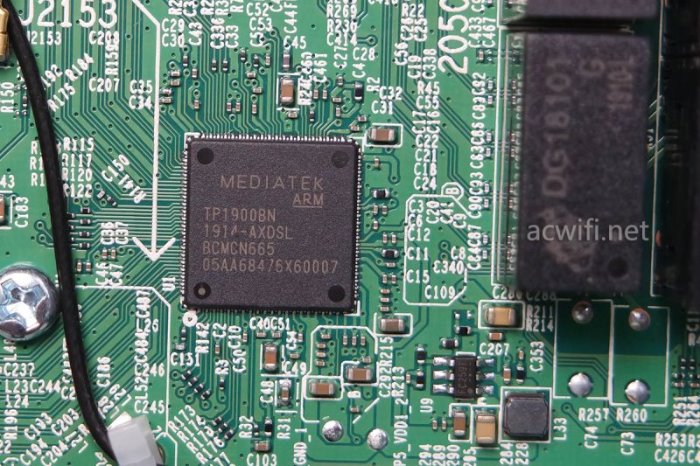
There is no shield, you can see at a glance that it is TP1900, the same chip as WDR7600 a dime, the largest chip is undoubtedly Brother Crab, because of the Gigabit network port, it must be connected to the Gigabit switch chip, (TP1900 SOC does not integrate Gigabit switch)
Three PCB Board Antennas: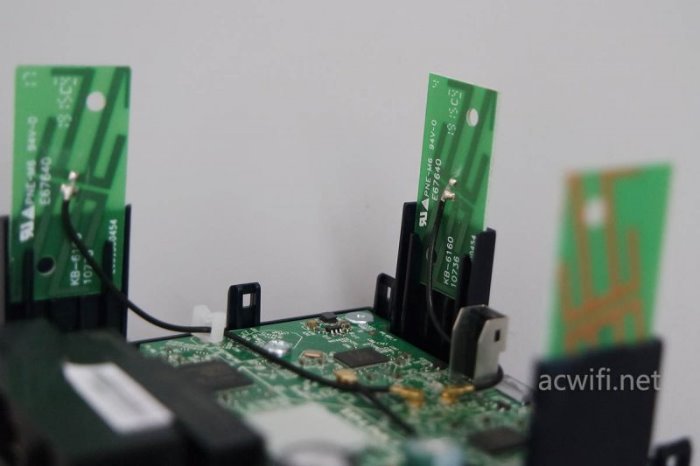
Double-sided adhesive: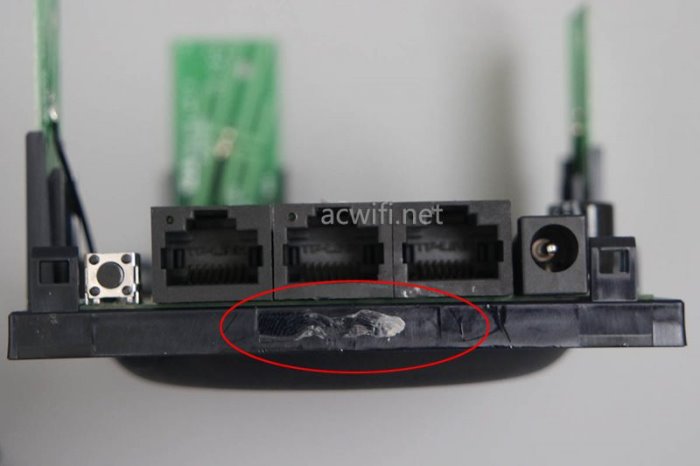
Front: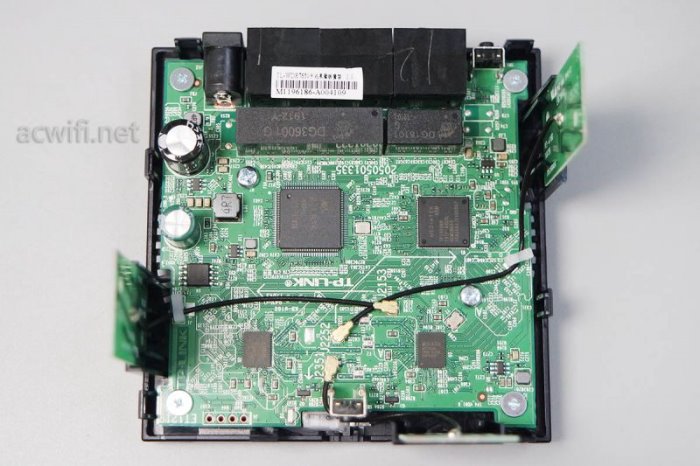
Remove the antenna and remove the front of the motherboard: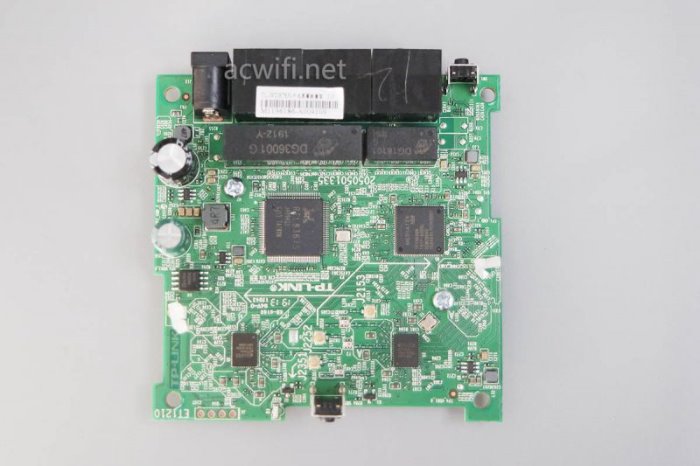
Reverse: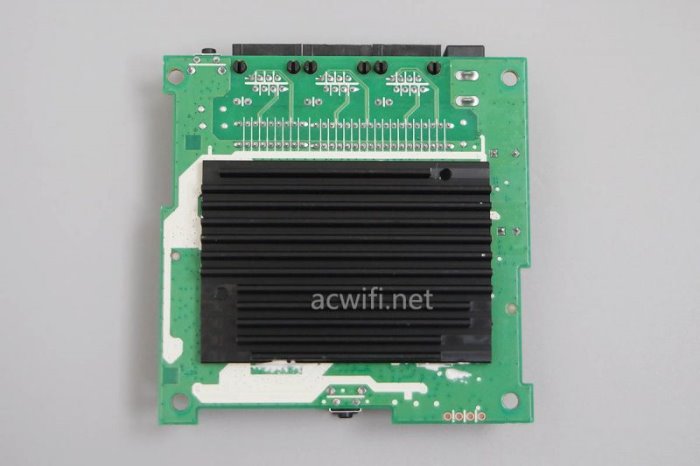
There is a heat dissipation aluminum sheet on the back, and there is nothing under it that is close to the back of the motherboard, the main function is the counterweight, and the secondary function is heat dissipation.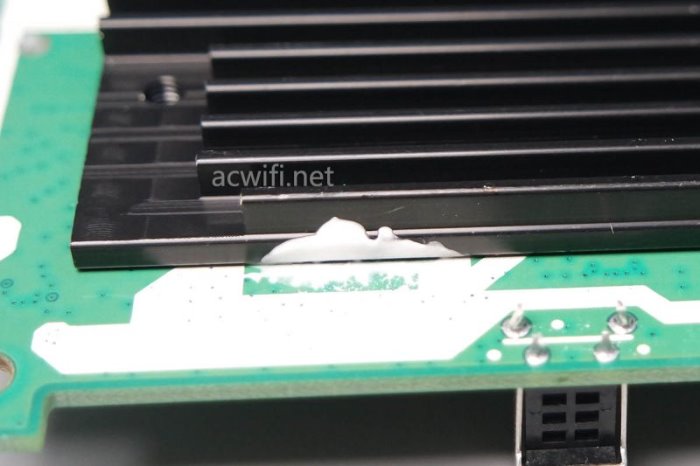
The CPU is TP1900, ARM architecture, is a SoC chip customized by MEDIATEK for TP-LINK, the CPU is a single-core 1.2GHz, integrated memory, and the capacity is estimated to be 64MB. TPLINK thinks giving you 64MB is enough. Integrates 2.4G and 5G, both 3×3 mimo. 2.4G up to 600Mbps, 5G up to 1300Mbps.
Gigabit switching chip: RTL8367S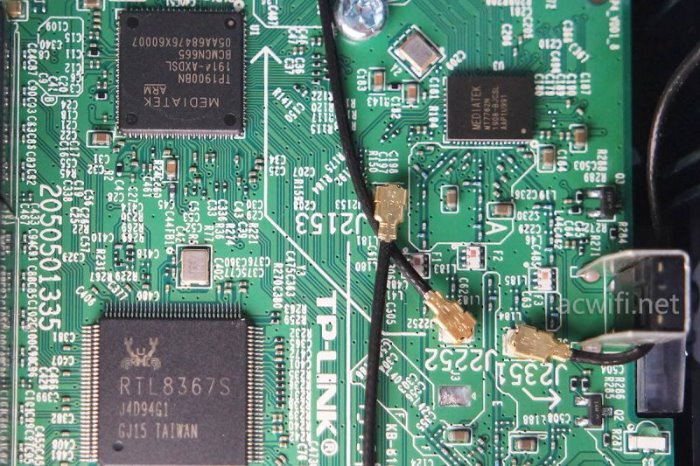
Two FEM chips, MT7761N responsible for 2.4G and MT7762N responsible for 5G.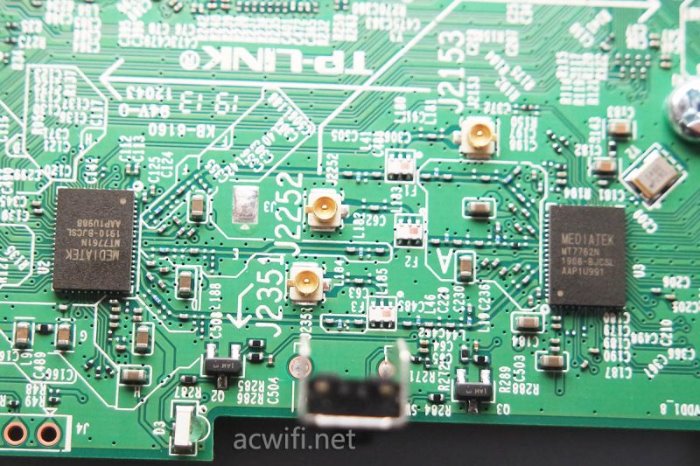
Flash: GD25Q32CSIG, 4MB? 4MB can prove that it is a genuine TPLINK router, because it uses the genuine VxWorks operating system.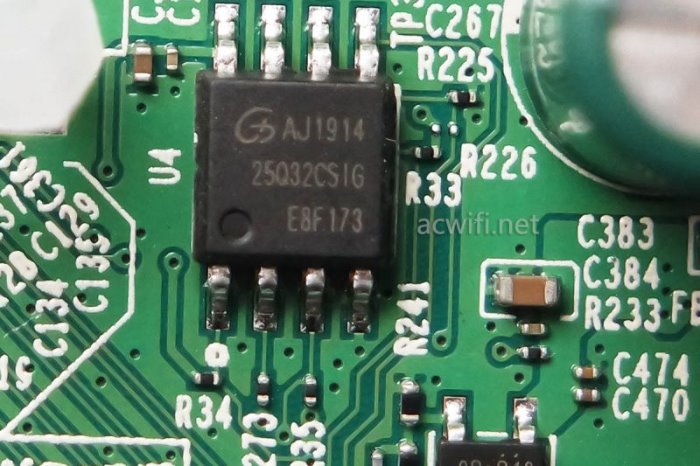
After disassembly, the installation and reset can be turned on, and the connection is normal.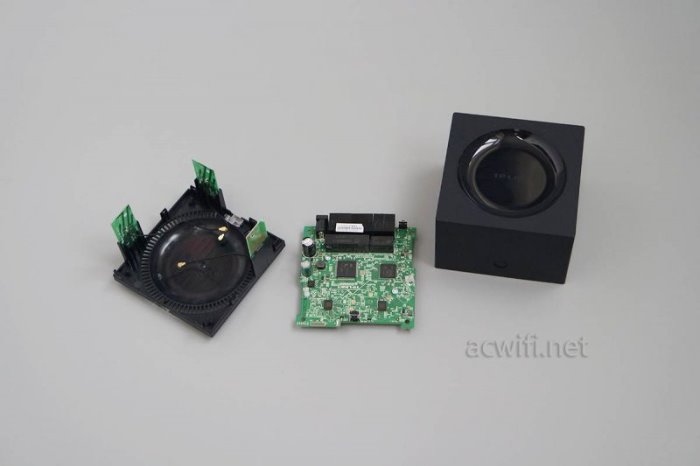
Try to separate 2.4G and 5G, but with this tip: “Turn off multi-band integration, the router’s seamless roaming function will fail, affecting your wireless roaming experience, please make sure to turn it off”. Seeing this, I don’t have a good impression of this one, but I have to actually test it to know if the dual-band separation really affects the roaming function. Practice is the only criterion for testing the truth!

In the words of insiders, the layout of this WDR7650 is very badly designed, the circuit layout is very messy, there will be a lot of interference, and the volume is limited?
A friend in the official account asked what the interference was, the source of the interference and what was disturbed? Here is an addition:
The interference here will be multifaceted, such as 2.4G interference to 5G and 5G interference to 2.4G. For useful signals, other signals are noise, and noise will affect the “signal-to-noise ratio” of useful signals, resulting in a decrease in throughput during high-speed communication, a decrease in sensitivity at low rates, or a shorter communication distance. In addition to the RF part, the interference source also includes digital circuits, clock signals, network port transformer signals, etc.!!