The California Institute of Technology has developed a ring sensor that can monitor female hormones. It can accurately predict ovulation and menstrual cycles, which is expected to change the way women manage their health.
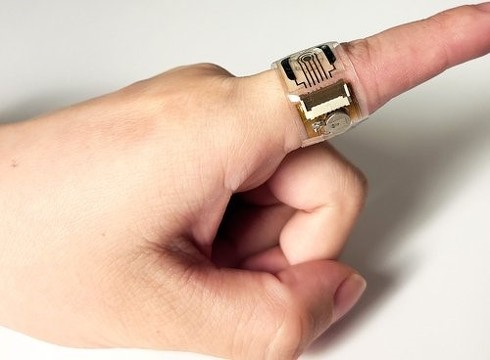
The new sweat sensor refers to the ring type and is specifically designed to detect sex hormones in women, such as estrogen and one of the specific forms, estradiol (Estradiol), and transmit the data wirelessly to a smartphone.
Because estradiol has multiple functions, doctors often monitor this hormone as part of women’s health care. However, this requires the patient to go to the clinic to draw blood and then analyze it. Even home test kits require the step of sending a blood or urine sample to a lab.
A feature of this sensor is that it operates automatically and non-invasively. The ring design means that it will not get in the way even when worn on a daily basis, and measurements can be viewed in real time. This greatly facilitates daily monitoring.
Technical Details:
1. Sensor design: The sensor uses a flexible plastic film as the base to guide sweat to the sensor part through tiny channels.
2. Sensitivity improvement: To improve the sensitivity of the sensor, the research team used gold nanoparticles and conductive titanium films.
3. Detection mechanism: The research team utilized specific DNA fragments called “aptamers” that only bind to specific substances such as estradiol, allowing for highly specific detection.
The device also collects information about sweat pH, sweat salt concentration, and skin temperature for real-time calibration.
Tests have shown that the sensor reliably and accurately tracks fluctuating levels of sweat estradiol throughout the reproductive cycle, from the lowest level during menstruation to the highest level during ovulation tenfold.
Potential Applications and Implications
1. Fertility and reproductive health: Some women track ovulation by monitoring their body temperature. However, the researchers say this method is not accurate enough and the body temperature only rises after ovulation begins. On the other hand, estrogen increases before ovulation. As a result, the sensor helps women who wish to conceive naturally or have children through IVF more accurately understand the timing of ovulation.
2. Chronic disease management: People undergoing hormone replacement therapy (HRT) can also benefit from this sweat sensor. Their bodies cannot produce enough estradiol on their own, so it is essential to carefully monitor their estradiol levels to ensure they are getting the correct dose.
3. Daily Health Monitoring: In addition to fertility and chronic disease management, this sensor can also be used for daily health monitoring, such as predicting menstrual cycles or monitoring mood swings related to hormone levels.
Details: https://nature.com/articles/s41565-023-01513-0