Online legend method 1: Sleeping on a hard bed can cure lumbar disc herniation
This “treatment” concept is deeply rooted in the hearts of many people, but the actual situation is:
- The already herniated lumbar disc, no matter how suitable the mattress and the best sleeping position, it cannot be restored.
- Sleeping on a hard bed alone cannot achieve the purpose of treating lumbar protrusion.
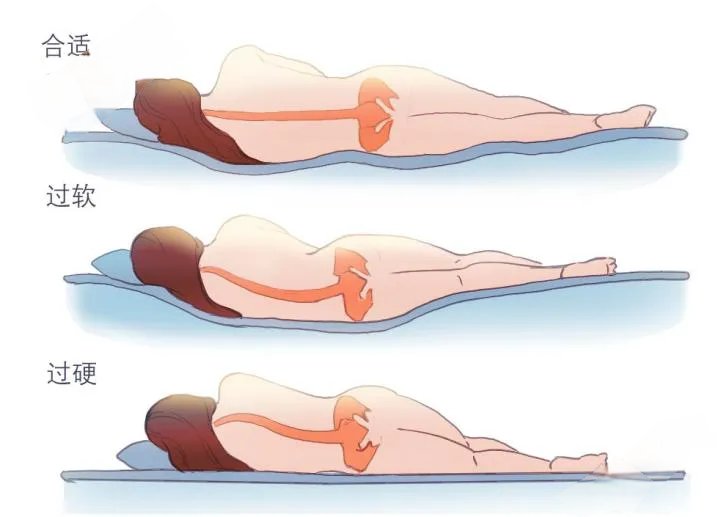
In fact, the mattress is too soft and hard, which is not good for the lumbar spine.
The mattress is too soft, which will increase the force on the waist when the body is lying flat and on its side. The most intuitive feeling is that you will feel empty under your waist and feel tired when you wake up.
On the contrary, a rigid bed will reduce the normal physiological curvature of the lumbar spine-“lordosis”.
Online legend method 2: Can the “Internet celebrity” sleeping position treat lumbar disc herniation?
There is an “Internet celebrity sleeping posture” that claims to be able to treat lumbar disc herniation, which has attracted many people to blindly follow suit.
The key points of this posture are: lie flat, lie on your back, put a pillow under your waist, bend your knees, flex your hips and abduct.
It’s actually imitating the sleeping position of a baby (or some weird cat).
But many people tried it and found themselves: lost! Sleep! Here!
Tweeters who don’t believe in it can also try it. This position is actually uncomfortable.
Occasionally placing the lumbar spine in this position (medically called “hyperextension”) is really good for relaxing the lumbar muscles. But for a long time, the muscles and ligaments can’t stand it.
The flexion and abduction posture relaxes the psoas major muscles (the red part in the figure below), but it also tensions the inner thigh muscles.
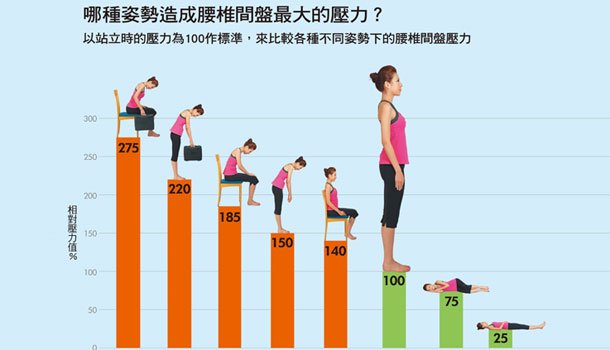
The only saving feature of the Internet celebrity sleeping position is that lying flat is really good for waist recovery. At this time, the pressure on the lumbar intervertebral disc is the smallest, only 1/8 of that when bending down at the desk and working.
Under different postures, the pressure on the lumbar disc (vertical axis) varies greatly.
Especially when bending down to lift heavy objects, and sitting on a chair bending down to hold heavy objects, the pressure on the waist is the greatest!
So, if you want to make the lumbar disc more comfortable, just lie flat.
Online Legend Method 3: Does waist pain mean lumbar disc herniation?
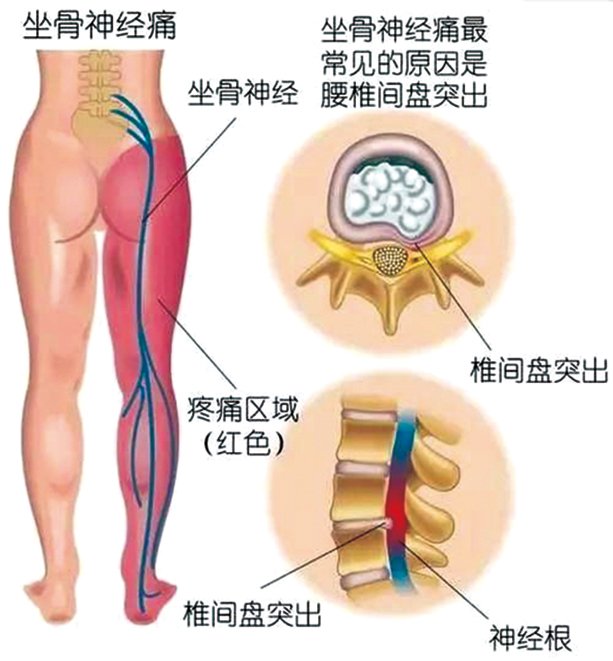
The main symptom of lumbar disc herniation is actually leg pain!
After the compressed nerve roots in the waist leave the lumbar spine, they travel down the buttocks and thighs, affecting the movement and feeling of the legs.
If you have long-term and persistent back or leg pain that lasts for more than 1 to 2 weeks, it is best to go to the hospital for treatment.
Don’t delay!!!
The diagnosis of lumbar disc herniation requires the discovery of the protruding disc on CT or magnetic resonance imaging, the location of the compressed nerve roots, and the matching of the range of leg pain.
So, how to treat lumbar disc herniation?
After diagnosis, your doctor may prescribe some painkillers or neurotrophic drugs.
Remember to follow the doctor’s advice and take it on time, and don’t stop taking it or increase it indiscriminately.
If it affects daily activities, you may need to wear waist protectors, lie down and rest, or go to the physical therapy department of a regular hospital for treatment. (Don’t go to small massage parlors on the street or informal clinics!)
In short, don’t hold on, you should take time off. No job is more important than health. Health comes first!