Vesuvius Challenge:
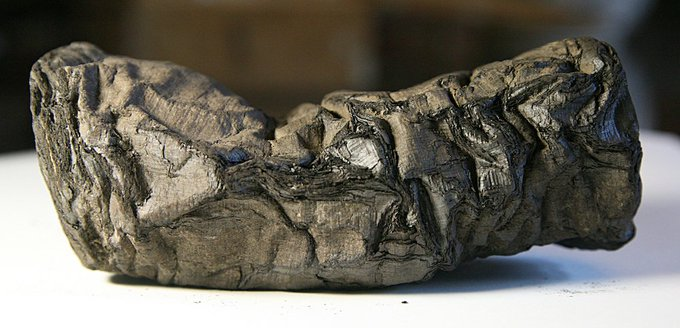
This is a competition aimed at interpreting the ancient scrolls of Herculaneum. The scrolls were carbonized when Mount Vesuvius erupted in 79 AD, and the handwriting on the scrolls was illegible and very fragile.
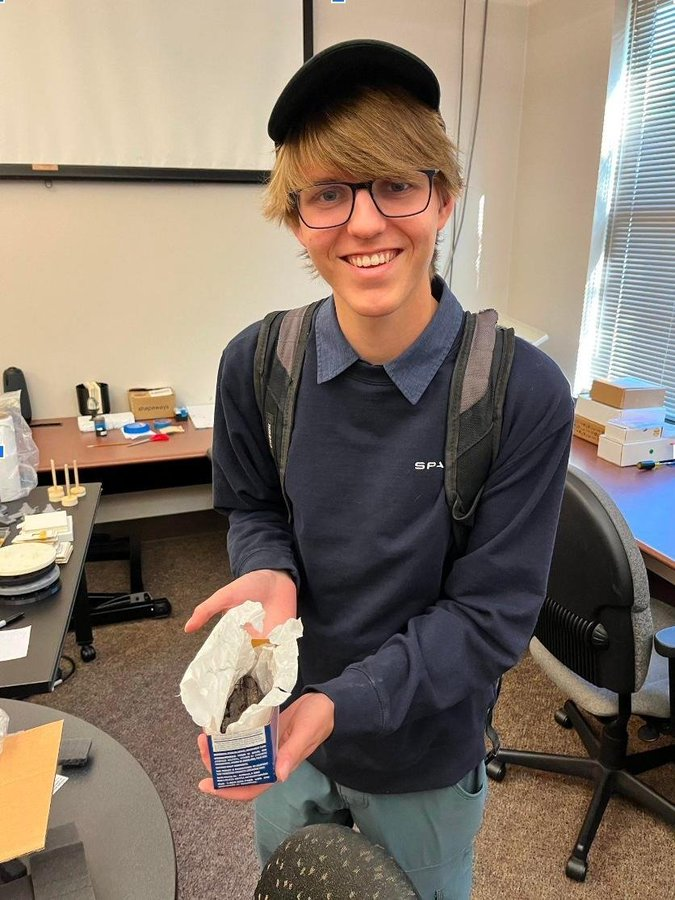
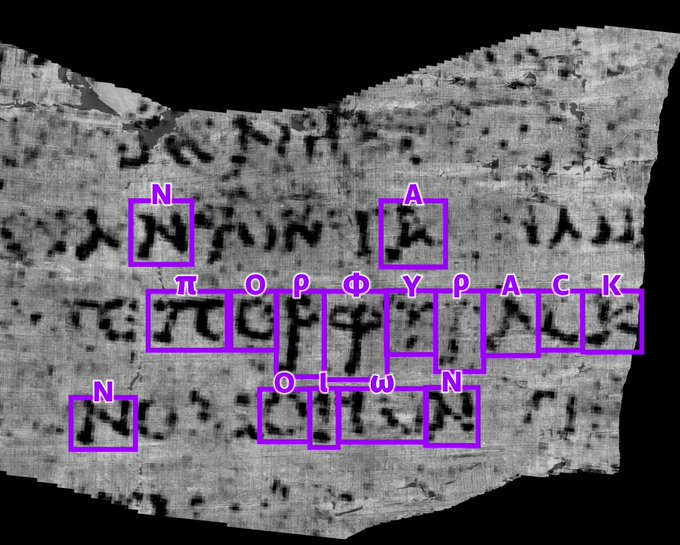
21-year-old college student contestant Luke Farritor used machine learning and other technologies to become the first person since 2000 to see a complete word on a scroll that has never been opened.
The Vesuvius Challenge is an interdisciplinary effort that combines history, archaeology and cutting-edge technologies such as machine learning to interpret ancient texts. This is an excellent example of how technology can help understand our past. Contestants are required to be able to recognize words and letters from scrolls that cannot be opened.
The award requires contestants to find at least 10 letters in a 4-square-centimeter area of the scroll. Luke Farritor became the first player to win the award, receiving a reward of $40000. Another contestant, Youssef Nader, independently discovered the same words in the same area, and the results were clearer-winning the second prize of $10,000.
Luke Farritor, a 21-year-old computer science student who is currently an intern at SpaceX, uses his spare time to train a machine learning model based on the “crack pattern.”
Working principle:
3D CT scan: A high-resolution 3D CT scan is performed using a particle accelerator to obtain the internal structure of the reel.
Machine learning models: Use machine learning algorithms to identify ink and text in scanned images.
Domain transfer technology: Apply models trained on other datasets to scroll data through unsupervised pre-training and fine-tuning.
The combination of these techniques not only speeds up the interpretation of ancient texts, but also avoids further damage to extremely fragile scrolls. This is a landmark achievement at the intersection of archaeology and artificial intelligence.
Detailed report:https://scrollprize.org/firstletters